Distribution Grid Management: Faults, Reliability Indices, and the Path to a Smarter Grid
A practical guide for utility operators, energy-adjacent founders, and anyone building in the infrastructure stack.

Omar Sher
What This Article Covers
Types of distribution lines
Common faults on distribution grids
Power system reliability: SAIDI, SAIFI, and CAIDI
Five practical solutions for managing grid stability
Who Should Read This: Utilities, Operators, and Energy-Adjacent Founders
Whether you operate an electric utility, manage a grid substation, run a commercial-scale business, or are building a company in the energy infrastructure stack, this article walks through the fundamentals of managing a distribution grid effectively.
As digitalization accelerates and global energy transition initiatives reshape infrastructure priorities, understanding distribution grid management has never been more commercially relevant. Power interruptions are not just an inconvenience: they translate into direct financial losses for businesses, grid operators, and consumers alike. Whether lines run overhead or underground, the principles of grid stability affect operational continuity and the bottom line.
How Power Moves: From Generation to Distribution
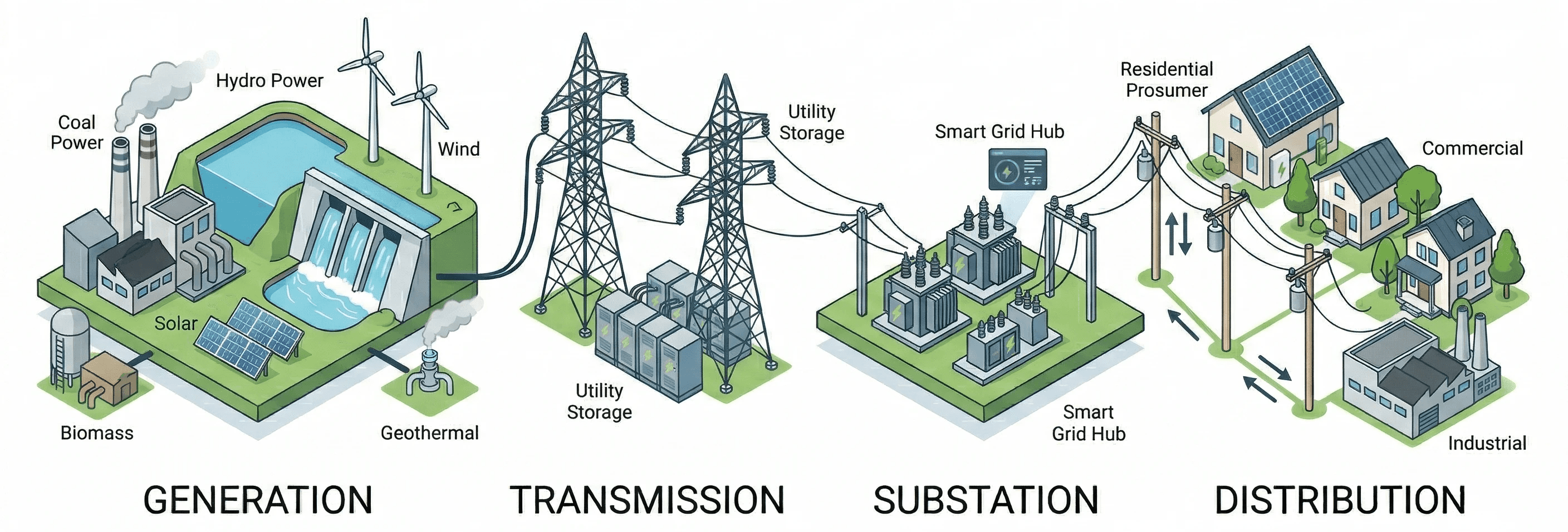
Before examining faults at the distribution level, it is useful to revisit how power flows from source to end user.
Energy generated at a power plant travels over long distances via high-voltage transmission lines to a grid substation. From there, distribution substations and associated equipment step voltage down from high to medium levels, then further to low voltage before it reaches households, businesses, factories, and other consumers, each with distinct load requirements.
The distribution grid is the final and most complex leg of this journey. It is a continuous load-balancing act between generation, supply, distribution, and consumption. More than a century after the first power grid was energized, today’s distribution networks face mounting pressure from rising consumption, the addition of distributed energy resources (DERs), renewable integration, and the increasing need for data-driven automation.
Overhead vs. Underground Distribution Lines: Key Differences
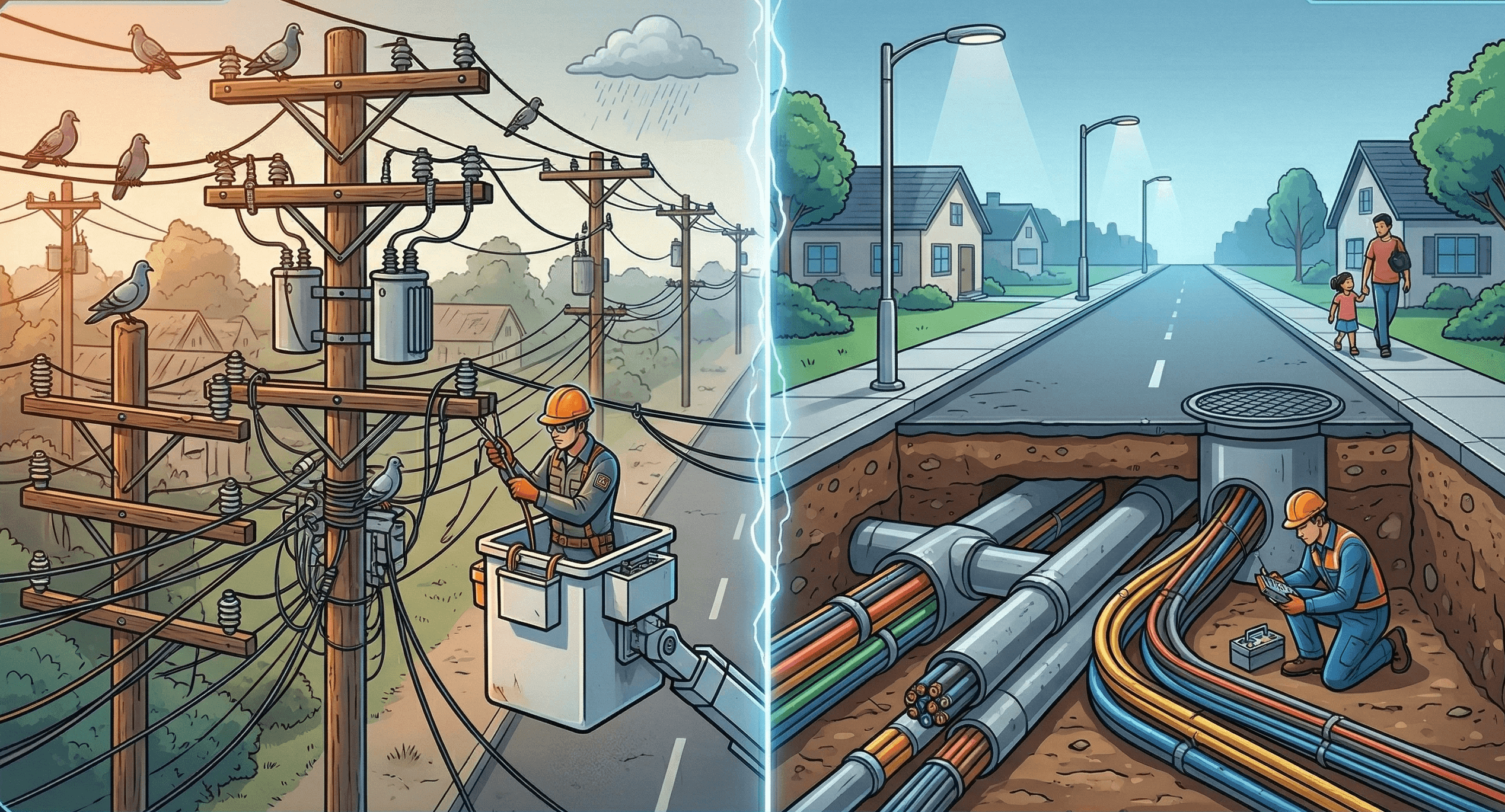
Distribution infrastructure falls into two primary configurations.
Overhead lines are the most common configuration in developing economies and many rural areas globally, favored for their lower construction cost and faster deployment timelines. Underground lines offer greater resilience against weather-related faults and visual disruption, but come with significantly higher installation and maintenance costs.
The choice between configurations depends on engineering design requirements, budget constraints, regulatory frameworks, and the operating environment. Both are subject to the same principles of load management, fault prevention, and reliability benchmarking covered in this article.
Overview of Power-Grid Infrastructure
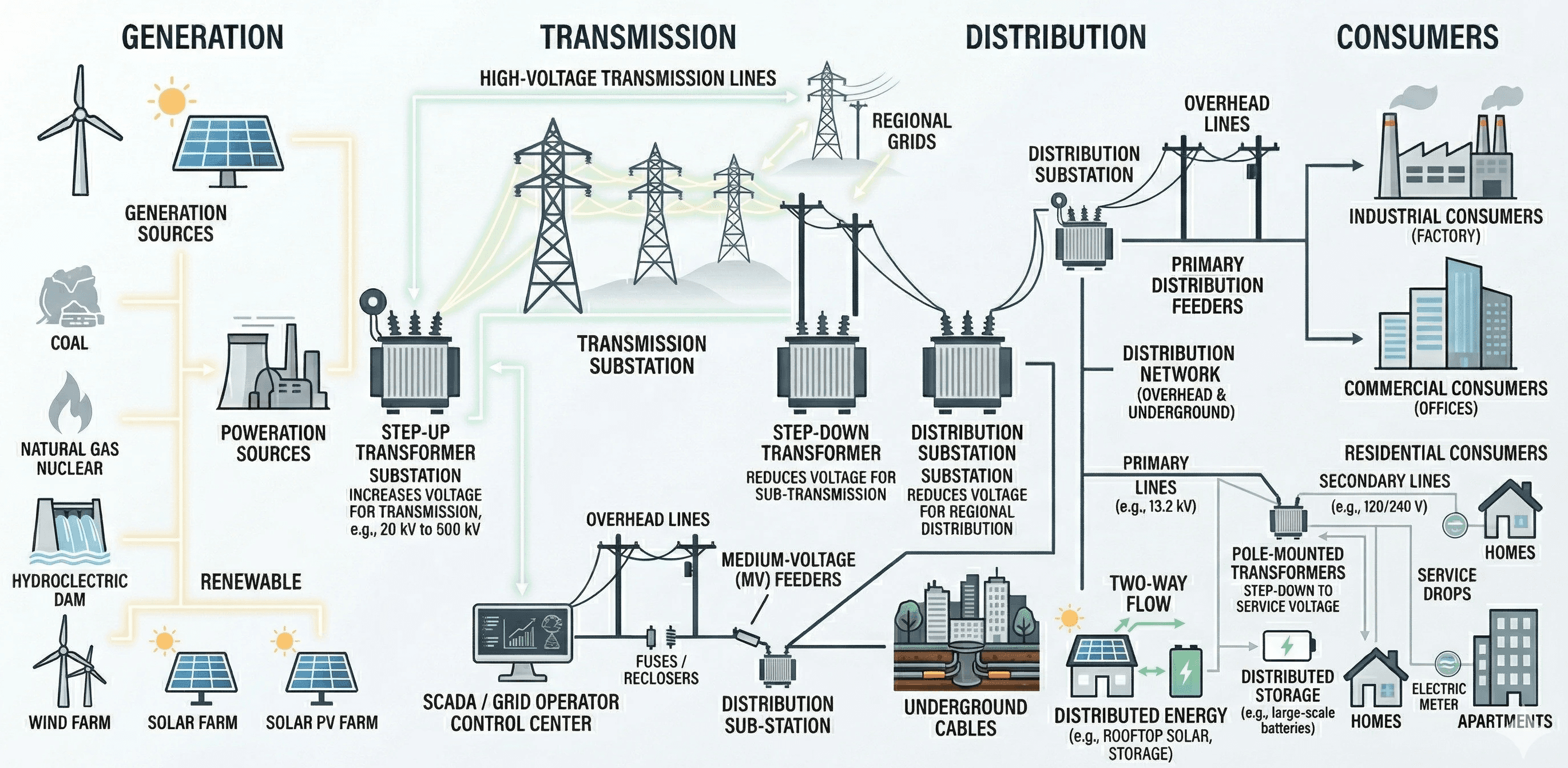
After power has been generated and delivered downstream over long distances through transmission lines to a grid substation, the grid substation and distribution substations further distribute and convert power from high voltage to medium voltage for various grid-connected customers: households, businesses, factories, and manufacturers, each with varying load requirements.
At the distribution-grid level, this is where certain issues arise. The distribution of energy is already a complex and delicate load-balancing act. The distribution grid is in dire need of smarter, data-driven, and automation technologies, including DERs and renewables, to meet increasing consumption and the demands of a modernizing world.
Common Faults on Distribution Grids
Non-Compliance With IEC Standards
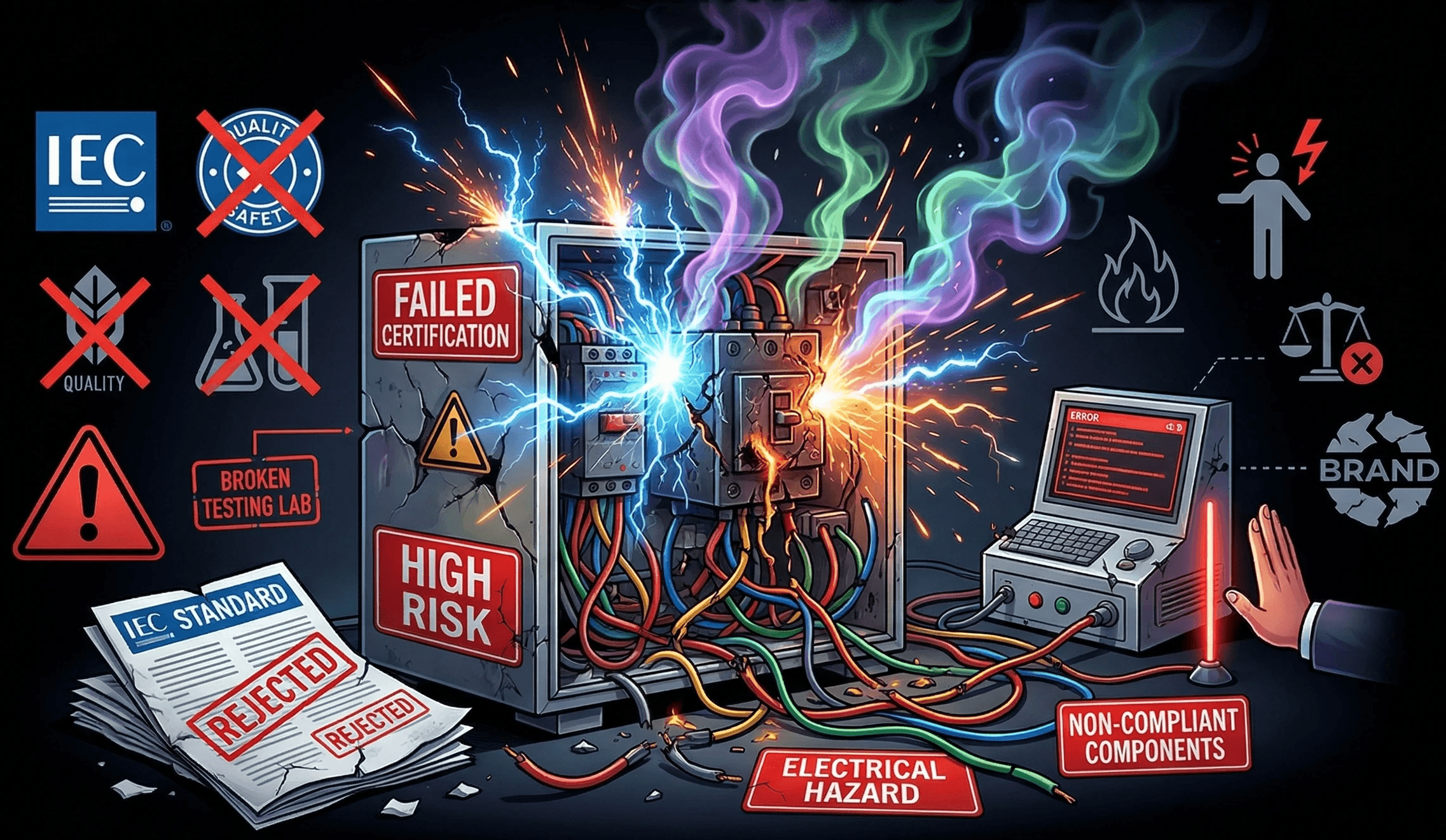
International standards developed by the International Electrotechnical Commission (IEC) exist to ensure that all components of the power system, from insulation specifications to line lengths and voltage ratings, are designed and operated safely and consistently. Public regulatory authorities are responsible for enforcing these standards within their jurisdictions.
In rapidly developing markets, a common challenge is the tension between the urgency to build critical power infrastructure quickly and the capacity to enforce international technical standards rigorously. The result is a mix of non-compliant components, undertrained maintenance crews, and regulatory enforcement gaps. Over time, these factors compound: non-compliant infrastructure is harder to maintain, more prone to faults, and more dangerous to crews dispatched to repair it.
Addressing this requires a unified approach among regulatory bodies, utilities, and international development partners that frames standards compliance not as a cost but as a long-term economic imperative.
Power Loss From Incorrect Line Length and Insulation
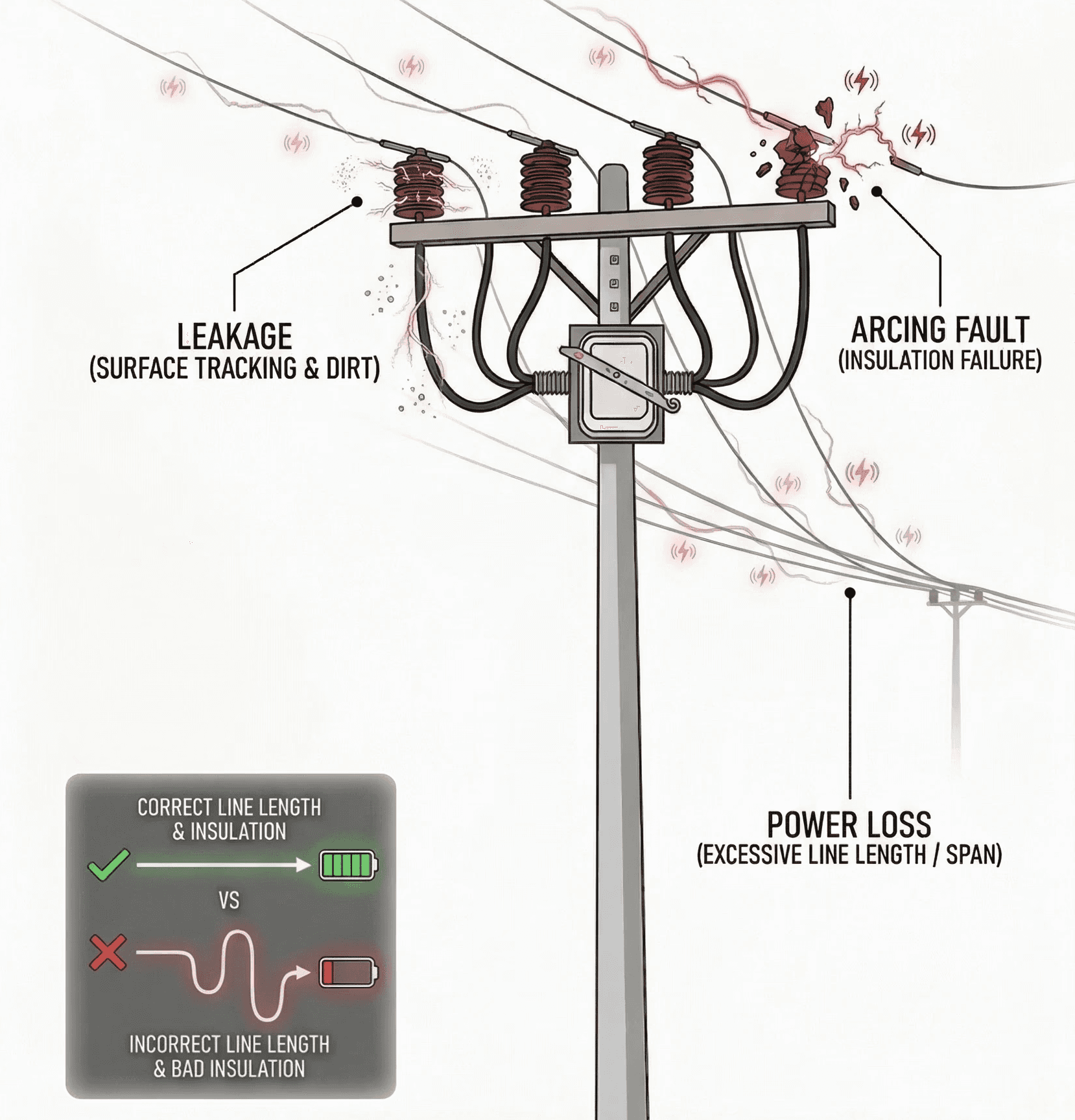
When overhead line lengths fall outside recommended technical parameters, or when insulation is compromised due to damaged pin insulators or below-specification materials, power loss and unstable supply are the predictable results.
Downstream consumers experience low-quality power or intermittent supply, which degrades the lifespan of electrical appliances, machinery, and business-critical equipment. Poor insulation also introduces serious safety risks, including arc-flash events that can cause injury or fatality.
Root causes typically trace to budget management failures at the utility level or inconsistent quality from suppliers. Both are addressable through tighter procurement standards and routine inspection protocols.
Overloading: When Load Demand Exceeds Capacity
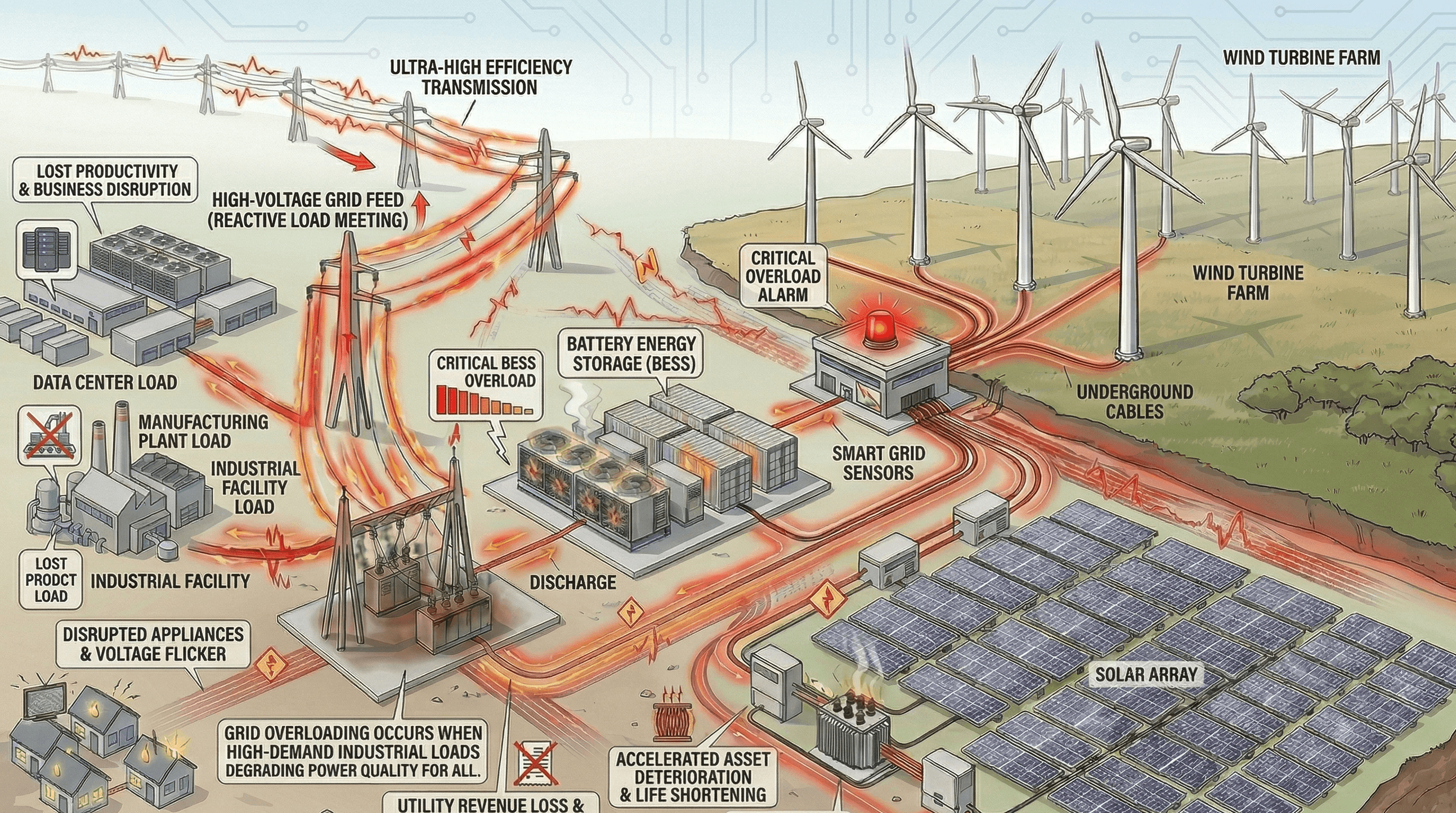
High-demand consumers such as manufacturers, data centers, and industrial facilities place significantly heavier loads on distribution lines than residential connections. When grid planning does not account for these load differences, overloading results.
An overloaded line degrades power quality across all connected customers, disrupts the operations of load-sensitive businesses, and accelerates deterioration of grid assets. The consequences are financial for all parties: lost productivity for businesses, revenue losses for utilities, and shortened asset life for the grid infrastructure itself.
Effective grid design requires accurate demand forecasting and proactive capacity planning that reflects the actual consumption profile of the service area.
The Data Gap: Operating Without Monitoring Infrastructure
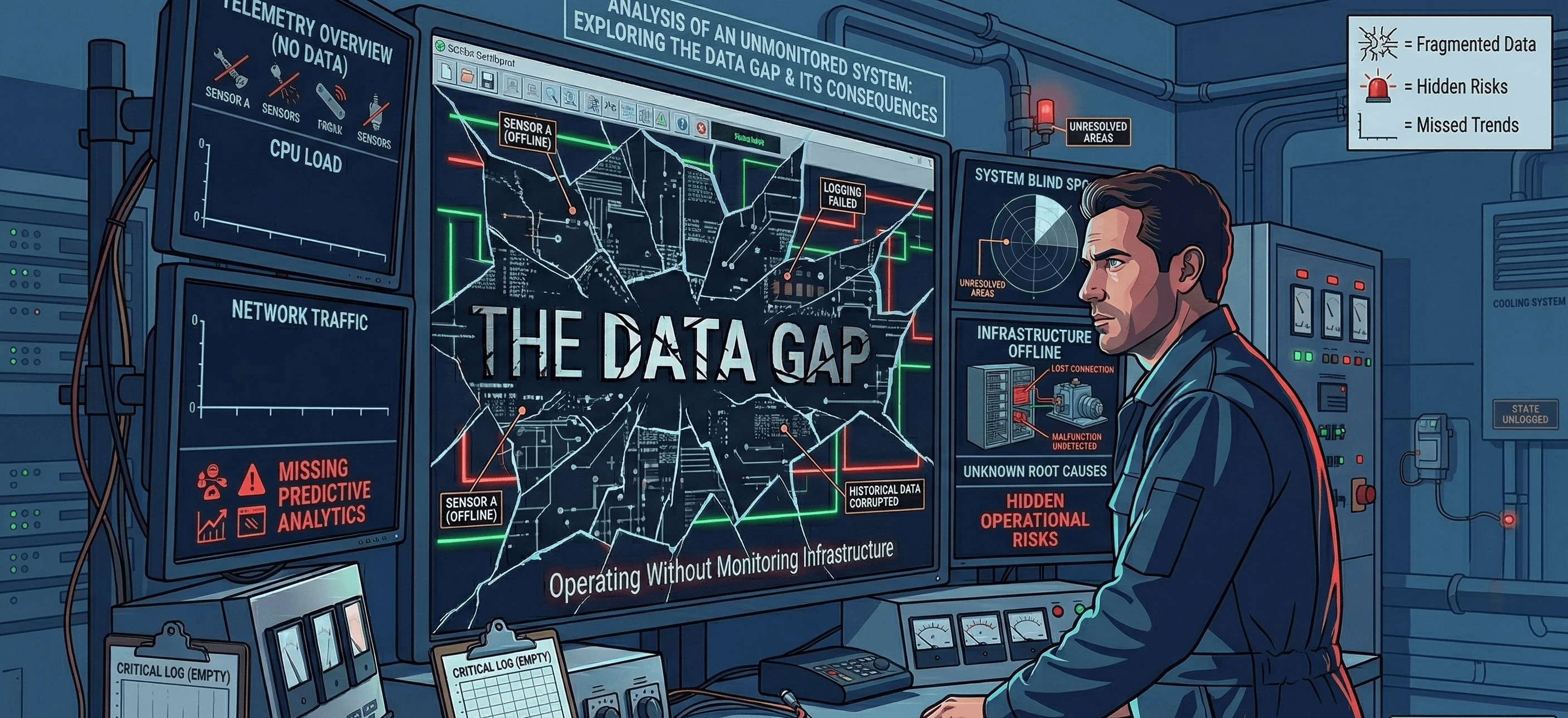
Data is the foundation of effective grid management. Without reliable mechanisms for collecting, monitoring, and analyzing power system data, operators are forced into reactive postures: responding to faults after they occur rather than anticipating and preventing them.
In the absence of SCADA (Supervisory Control and Data Acquisition) systems, IIoT (Industrial Internet of Things) devices, or automated reporting infrastructure, data collection becomes a manual and error-prone task. Legacy metering systems, often decades old, lack remote communication and automated data-transfer capabilities. Integrating data across hardware from different manufacturers onto a single dashboard adds further complexity, as proprietary systems from major vendors are rarely interoperable out of the box.
The practical consequence is delayed decision-making, inaccurate demand forecasting, and an inability to detect emerging faults before they escalate into outages. In remote or difficult-to-access areas, the challenge is compounded by the physical barriers that prevent timely on-site inspections.
Solving the data gap does not always require a full infrastructure overhaul. Targeted deployment of IoT-enabled monitoring equipment on existing commissioned assets can unlock meaningful data collection incrementally and cost-effectively.
Human Error and Safety Failures
Human error remains a significant and preventable source of grid faults. Contributing factors include gaps in technical training, limited awareness of safety protocols, and the absence of mandatory maintenance routines.
Incidents range from maintenance crews working on energized lines without appropriate safety equipment to construction companies excavating near medium-voltage cables with heavy machinery. Members of the public interacting with pole-mounted electrical equipment, vehicle accidents involving power lines, and vegetation management errors that cause trees to fall onto live lines are also common fault triggers.
Most of these incidents are preventable. Targeted awareness programs, basic safety training, and clearer communication about the risks posed by energized electrical infrastructure can materially reduce their frequency. Formal regulatory requirements around maintenance and safety are the most effective structural lever, but awareness-led interventions have measurable impact even in markets where enforcement is still developing.
Automated Fault Detection: Why Its Absence Is Costly
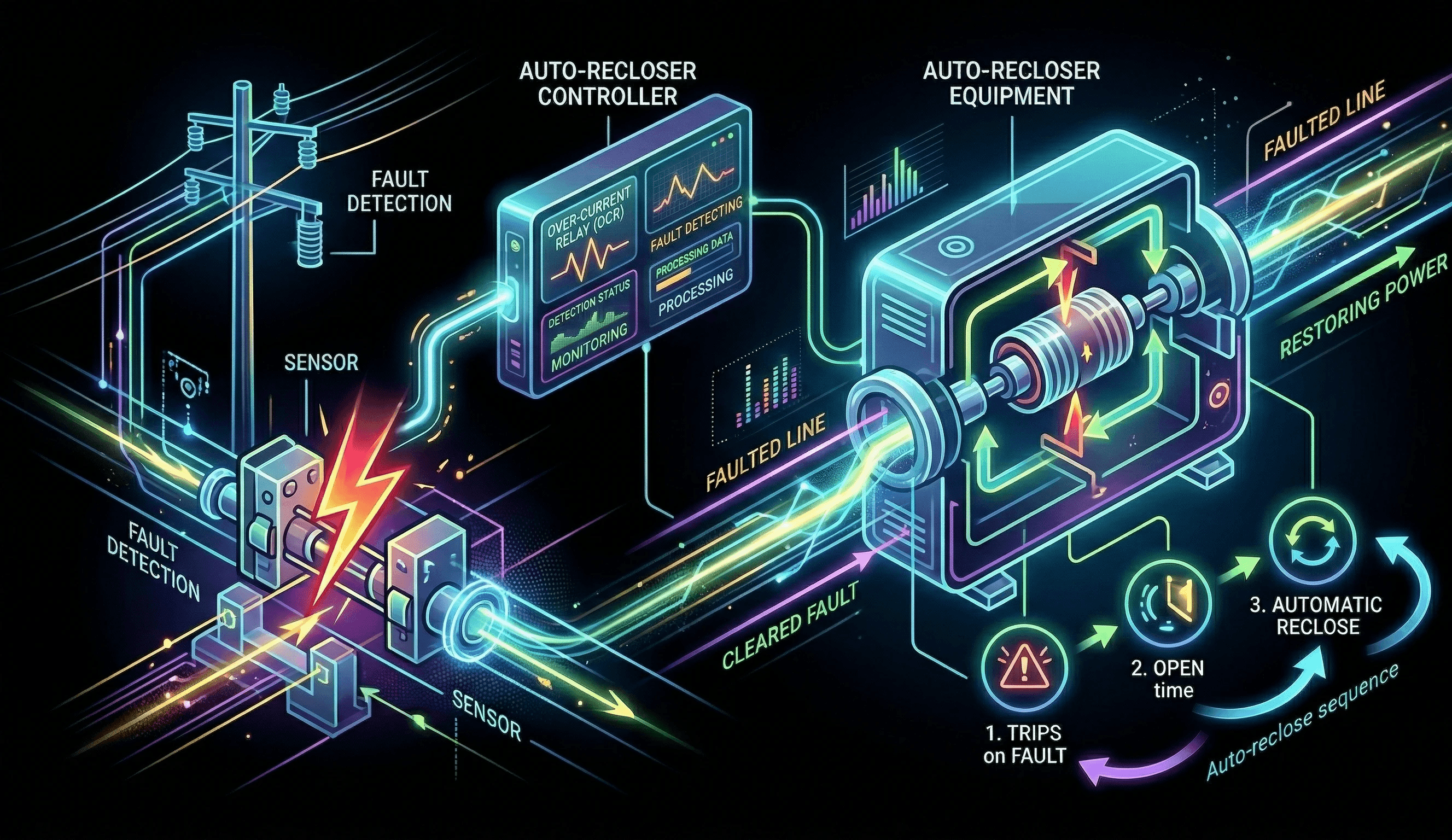
In utilities that lack automated fault detection and classification capabilities, the typical incident response begins with a customer complaint call. The operator must then manually identify the fault location, determine the fault type, and coordinate restoration, all without real-time system visibility.
This translates directly into extended outage durations. Outages of four to five hours are not uncommon in systems without fault management automation. The financial and reputational cost to the utility is compounded by the operational losses borne by affected businesses.
Automated fault management systems address this by providing real-time detection, classification, and in some configurations, automated isolation and restoration. The reduction in outage duration has a direct and quantifiable impact on SAIDI, SAIFI, and CAIDI scores, covered in the next section.
Natural Disasters and Grid Resilience
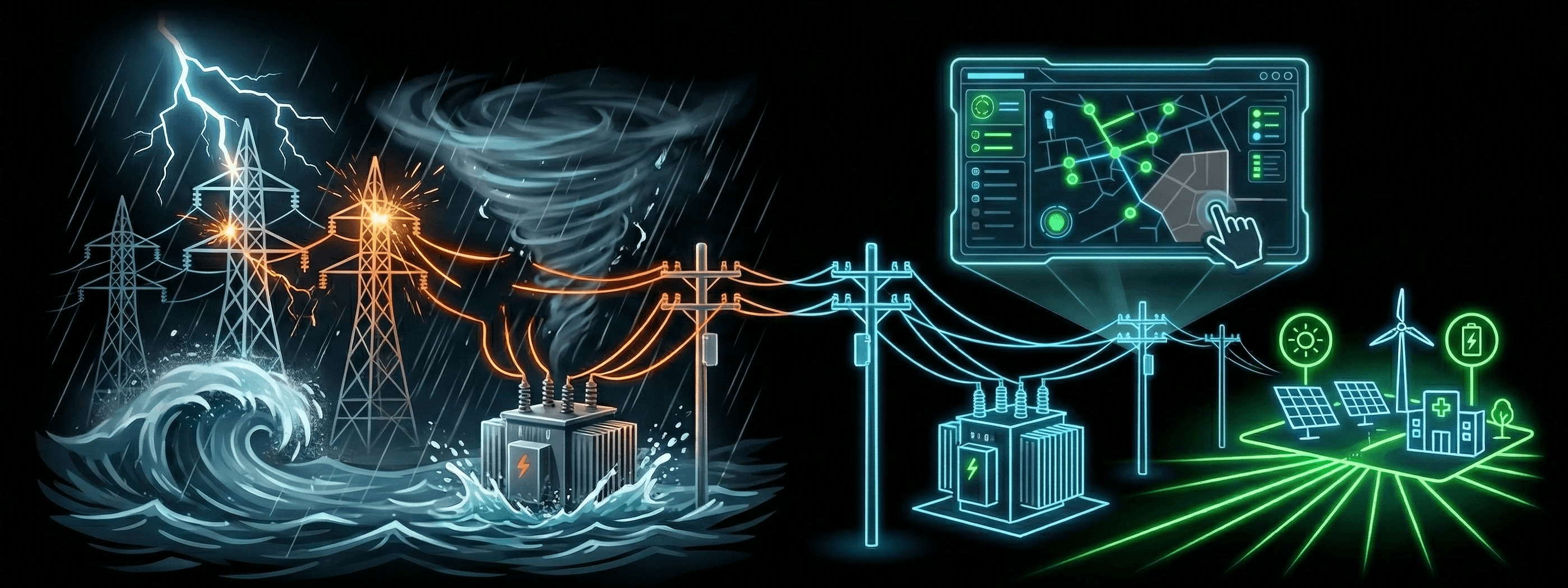
Force majeure events including floods, storms, lightning strikes, and earthquakes impose unpredictable stress on grid infrastructure. While these events cannot be entirely prevented, their impact on the grid can be substantially mitigated through smart monitoring and remote control capabilities.
With a SCADA, ADMS (Advanced Distribution Management System), or equivalent platform in place, operators can proactively de-energize sections of the grid ahead of severe weather events and re-energize them in a controlled sequence once conditions allow. Remote-controlled DERs including micro grids and distributed renewables provide additional flexibility during and after natural disasters, enabling operators to maintain supply to critical loads even when portions of the main grid are compromised.